

Wall portraits have emerged as one of the most powerful design elements in contemporary interior spaces, transforming blank walls into compelling visual statements. Whether you're drawn to sports memorabilia, travel destinations, or university themes, the right portrait display can define the character of your home or office while reflecting your personal interests and aesthetic preferences. Understanding how to select, size, and arrange these pieces effectively makes the difference between a cluttered wall and a curated gallery experience.
Understanding Wall Portrait Fundamentals
Wall portraits encompass far more than traditional family photographs. In 2026, the definition has expanded to include artistic representations of beloved locations, iconic sporting venues, and memorable destinations that hold personal significance. These pieces serve as conversation starters and mood setters within any room.
The evolution of wall portraits reflects broader trends in personalization and experiential design. People increasingly seek artwork that tells their story rather than generic pieces that could belong to anyone. This shift has made themed collections particularly popular among design-conscious homeowners.
Choosing the Right Portrait Style
When selecting wall portraits for your space, consider how different styles complement your existing decor. Sports enthusiasts might gravitate toward minimalist representations of famous tennis courts or golf courses, while travel lovers often prefer stylized maps or iconic landmarks.
Key style considerations include:
- Minimalist designs that emphasize clean lines and negative space
- Vintage aesthetics that add nostalgic warmth to contemporary spaces
- Modern interpretations featuring bold colors and geometric patterns
- Monochromatic schemes that create sophisticated, cohesive displays
- Mixed media approaches combining photography with graphic elements
The color palette of your wall portraits should harmonize with your room's existing tones. Neutral portraits offer versatility and timeless appeal, while vibrant pieces can serve as focal points that energize a space.
Sizing Wall Portraits for Maximum Impact
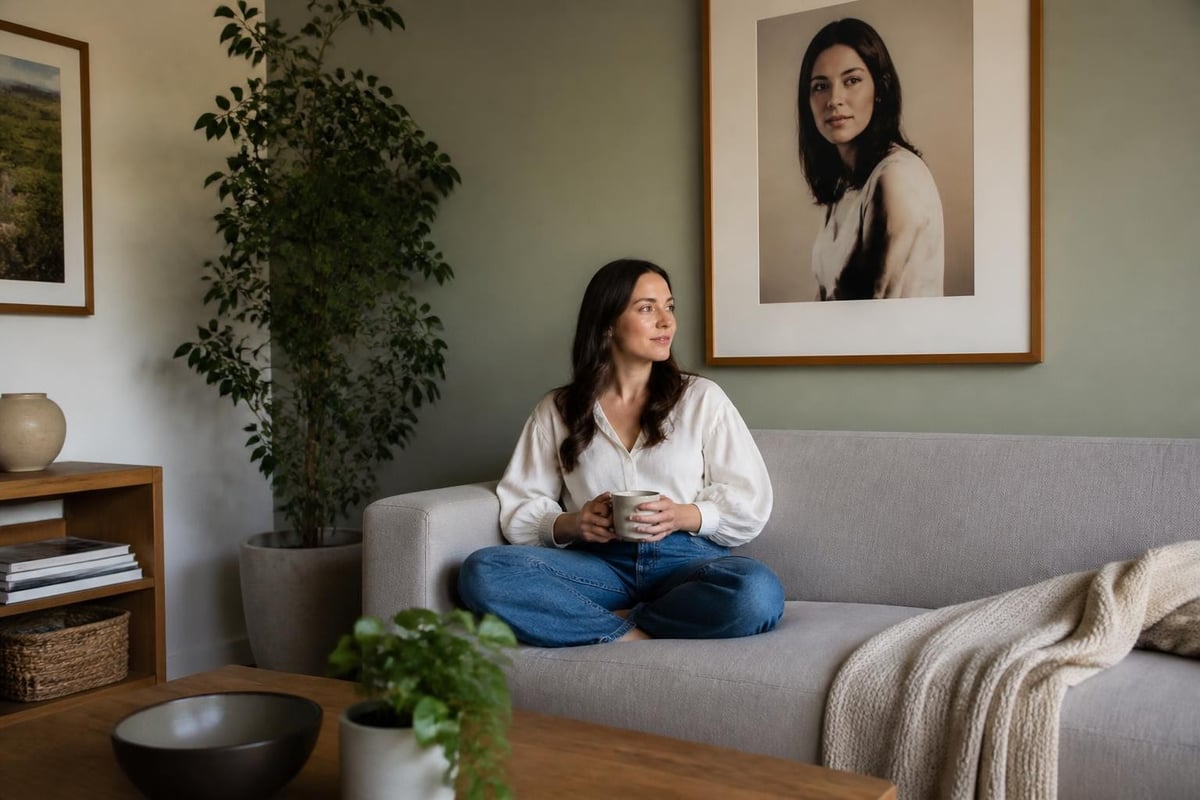
Size matters significantly when it comes to wall portraits. Selecting appropriate dimensions requires careful consideration of viewing distance, wall space, and the portrait's intended role within the room. A common mistake involves choosing pieces that are too small for the available space, resulting in displays that feel disconnected from their surroundings.
Calculating Proper Dimensions
Professional designers typically recommend that artwork occupy between 60 and 75 percent of the available wall space above furniture pieces. For standalone walls, portraits should be scaled according to the room's overall proportions and ceiling height.
| Wall Length | Recommended Portrait Width | Ideal for |
|---|---|---|
| 4-6 feet | 24-48 inches | Small spaces, powder rooms |
| 6-8 feet | 48-60 inches | Standard living rooms, bedrooms |
| 8-12 feet | 60-90 inches | Large walls, statement pieces |
| 12+ feet | 90+ inches or gallery wall | Expansive spaces, commercial settings |
Consider the relationship between subject size within the portrait and viewing distance. Detailed images with intricate elements work well when viewers can approach closely, while bold, simplified compositions maintain their impact from across the room. When planning your display, proper portrait photography techniques can inform how you evaluate composition and framing in existing artwork.
Vertical Versus Horizontal Orientation
Portrait orientation (vertical) naturally draws the eye upward, making rooms feel taller and more spacious. This orientation works particularly well in narrow spaces, hallways, or above vertical furniture pieces. Landscape orientation (horizontal) emphasizes width and creates a calming, grounding effect.
Many designers mix orientations within gallery walls to create visual interest and movement. The key is maintaining balance so no single piece overwhelms the composition.
Creating Compelling Gallery Walls
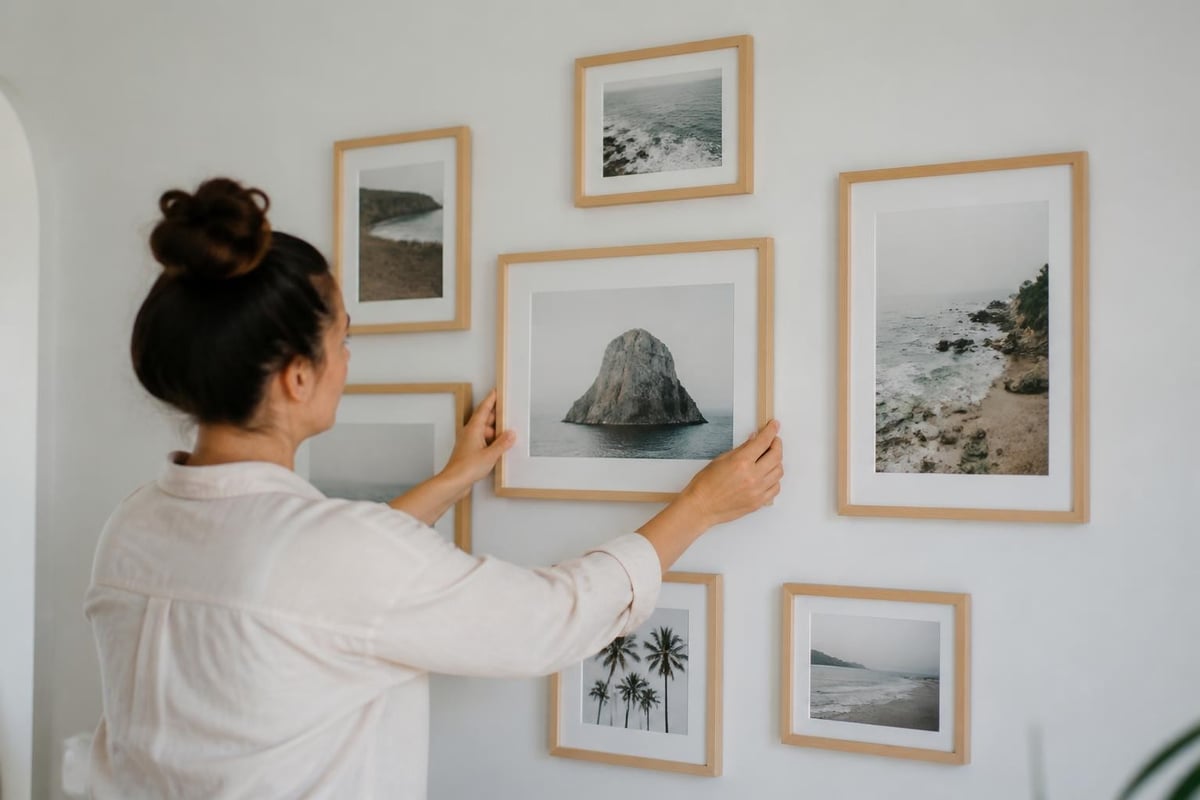
Gallery walls represent the pinnacle of wall portrait design, allowing you to showcase multiple pieces in a cohesive arrangement. However, minimalist portrait gallery walls often look better with fewer prints, emphasizing quality over quantity and creating breathing room between pieces.
Planning Your Gallery Layout
Before hanging anything, plan your arrangement on the floor or use paper templates on the wall. This planning phase prevents unnecessary holes and ensures proper spacing between pieces.
Essential gallery wall principles:
- Maintain consistent spacing between frames (typically 2-4 inches)
- Align pieces along a central horizontal line for cohesion
- Start with your largest or most important piece as the anchor
- Build outward while maintaining visual balance
- Step back frequently to assess overall composition
The grid layout offers a clean, modern aesthetic where all frames align perfectly. Salon-style arrangements feel more organic and eclectic, mixing sizes and orientations freely. Your choice should reflect both your personal style and the formality of the space.
For sports-themed displays, consider grouping related venues or events. Tennis court art from major tournaments creates a cohesive narrative, while mixing sports might feel disjointed unless tied together through consistent framing or color schemes.
Lighting and Placement Strategies
Proper lighting transforms good wall portraits into stunning focal points. Natural light offers beautiful illumination but requires careful management to prevent fading and glare. UV-protective glass and strategic positioning help preserve your investment.
Optimal Hanging Heights
The industry standard places the center of artwork at 57-60 inches from the floor, approximating average eye level. This guideline ensures comfortable viewing whether standing or seated. Adjust slightly higher in rooms where people typically stand (entryways, kitchens) and lower in spaces designed for sitting (dining rooms, bedrooms).
Above furniture, maintain 6-12 inches of space between the top of the furniture and the bottom of the frame. This creates visual connection without making the portrait feel like it's floating away from its anchor point.
| Room Type | Recommended Height | Lighting Approach |
|---|---|---|
| Living Room | 57-60 inches (center) | Picture lights or track lighting |
| Bedroom | 55-58 inches (center) | Soft ambient with accent options |
| Hallway | 60-63 inches (center) | Evenly spaced overhead or sconces |
| Dining Room | 56-59 inches (center) | Dimmable overhead or wall-mounted |
Accent lighting adds drama and ensures your wall portraits remain visible during evening hours. Picture lights mounted directly to frames offer targeted illumination, while track lighting provides flexibility for highlighting multiple pieces. Understanding portrait photography lighting principles can help you appreciate how light affects the artwork itself.
Thematic Coherence in Portrait Selection
Wall portraits gain power when they tell a cohesive story. Rather than randomly selecting pieces that appeal individually, consider how they work together to express your interests and experiences. This approach is particularly relevant for collections focused on travel, sports, or educational institutions.
Building Sports-Themed Collections
Sports enthusiasts have exceptional options for creating meaningful wall portrait displays. Golf course prints documenting legendary venues like Augusta National or St. Andrews connect personal passion with iconic locations. Similarly, Formula 1 track layouts appeal to motorsport fans who appreciate the technical beauty of racing circuits.
When building thematic collections, establish clear boundaries. Focusing on a single sport creates stronger visual impact than mixing multiple athletic themes. Within that sport, you might explore different approaches:
- Chronicle your personal journey (courses played, matches attended)
- Celebrate historic venues and their architectural significance
- Document a specific tournament or championship season
- Explore geographic diversity within the sport
Travel-themed wall portraits work similarly, whether showcasing cities visited, dream destinations, or a specific region's highlights. The key is maintaining enough consistency that viewers understand the connection between pieces.
University and Educational Themes
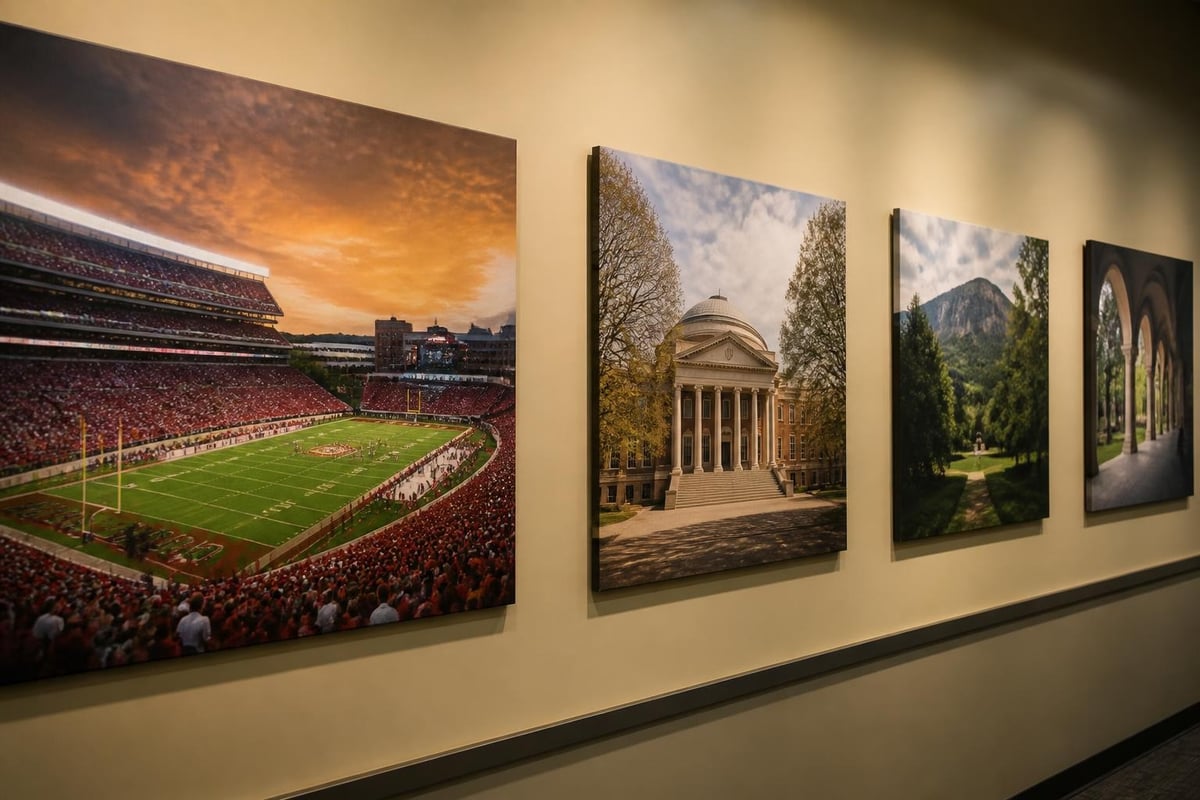
University-themed wall portraits resonate deeply with alumni and students, serving as proud reminders of formative years. These pieces range from campus landmarks and architectural details to stylized representations of school colors and mascots.
Educational institutions increasingly recognize the value of unique art walls in creating identity and belonging within campus spaces. This same principle applies to home displays celebrating academic achievements and connections.
Frame Selection and Matting Considerations
Frames fundamentally impact how wall portraits integrate into your space. The frame acts as a transition between artwork and environment, either blending seamlessly or creating deliberate contrast. Your choice should consider both the portrait's style and your room's existing finishes.
Material and Finish Options
Wood frames offer warmth and traditional appeal, available in finishes ranging from light oak to deep walnut. Metal frames provide contemporary sophistication, particularly in matte black, brushed silver, or gold tones. Acrylic frames deliver ultra-modern minimalism, allowing portraits to appear as though floating against the wall.
Frame selection guidelines:
- Match frame finish to existing room metals (light fixtures, hardware)
- Consider wood tones in relation to furniture and flooring
- Use consistent framing across gallery walls for cohesion
- Allow statement pieces to stand out with distinctive frames
- Prioritize quality construction for long-term durability
Matting creates visual breathing room between the portrait and frame edge, adding sophistication and protecting the artwork. White and cream mats offer classic versatility, while colored mats can either complement or contrast with the image. Double matting adds depth and premium appeal.
Sustainability in Wall Portrait Selection
Environmental consciousness increasingly influences purchasing decisions in 2026, including wall art selections. Sustainable wall portraits utilize eco-friendly materials, responsible production methods, and ethical sourcing practices that minimize environmental impact.
Eco-Friendly Materials and Production
Quality art prints now employ sustainable papers, water-based inks, and recycled or responsibly sourced framing materials. These choices maintain visual excellence while reducing ecological footprint. Look for certifications indicating sustainable forestry practices and low-emission production facilities.
Digital printing technology has advanced to deliver museum-quality results with minimal waste. Unlike traditional methods requiring extensive setup and producing numerous test prints, modern digital processes print precisely what's needed, reducing material consumption significantly.
Shipping practices also matter. Companies offering carbon-neutral delivery or consolidated shipping reduce transportation emissions. Global accessibility no longer requires environmental compromise when providers implement thoughtful logistics strategies.
Maintenance and Long-Term Care
Proper maintenance ensures wall portraits remain vibrant and undamaged for years. Regular care prevents common issues like fading, moisture damage, and frame deterioration that can diminish your investment.
Protection from Environmental Factors
Direct sunlight represents the primary threat to wall portraits, causing colors to fade and materials to deteriorate. Position pieces away from windows receiving intense sun, or use UV-protective glazing and window treatments. Portrait photography tips often emphasize lighting quality, which extends to how you illuminate displayed artwork.
Essential care practices include:
- Dust frames and glass monthly using microfiber cloths
- Maintain consistent humidity levels (40-50 percent ideal)
- Avoid hanging near heating vents or air conditioning units
- Check periodically for loose hardware or frame damage
- Rotate pieces occasionally to distribute light exposure evenly
Climate control matters particularly for valuable or sentimental pieces. Extreme temperature fluctuations and high humidity can warp frames, damage paper, and promote mold growth. Dehumidifiers in moisture-prone areas protect your collection.
Budget-Friendly Wall Portrait Strategies
Creating stunning wall portrait displays doesn't require unlimited resources. Strategic approaches allow you to achieve professional results while managing costs effectively. The key lies in prioritizing quality where it matters most and finding creative solutions for other elements.
Investment Prioritization
Focus your budget on the portraits themselves, ensuring you select pieces that genuinely resonate with your interests and aesthetic preferences. Affordable wall art options have expanded dramatically, offering high-quality prints at accessible price points without compromising visual impact.
Standard frame sizes (8x10, 11x14, 16x20, 24x36 inches) cost significantly less than custom dimensions. Plan your portrait purchases around these sizes when possible, reserving custom framing for truly special pieces. Many retailers offer frame and mat combinations that deliver professional results at fraction of custom costs.
| Budget Level | Strategy | Expected Results |
|---|---|---|
| Entry ($50-200) | Standard sizes, ready-made frames, focused theme | Clean, cohesive single wall display |
| Mid-range ($200-500) | Mix of sizes, quality framing, small gallery wall | Professional appearance, lasting quality |
| Premium ($500+) | Custom sizing, museum-quality materials, extensive gallery | Gallery-worthy installation, investment pieces |
Building your collection gradually allows you to spread costs over time while ensuring each addition receives proper consideration. Seasonal sales and promotions offer opportunities to acquire quality pieces at reduced prices.
DIY Installation and Arrangement
Professional installation services add convenience but increase costs substantially. With proper tools and patience, most homeowners can achieve excellent results independently. Invest in a quality level, measuring tape, and appropriate wall anchors for your wall type.
Online planning tools and smartphone apps help visualize arrangements before committing to nail holes. These resources allow you to experiment with different configurations, ensuring optimal layout before installation begins.
Current Trends in Wall Portrait Design
Wall portrait trends in 2026 reflect broader interior design movements emphasizing personalization, sustainability, and bold self-expression. Understanding these trends helps ensure your selections remain relevant while avoiding overly trendy choices that quickly feel dated.
Minimalism and Negative Space
The "less is more" philosophy continues dominating sophisticated interiors. Rather than covering every available wall surface, designers increasingly embrace negative space that allows individual pieces to breathe and command attention. This approach aligns with minimalist portrait walls that prioritize thoughtful curation over quantity.
Large-scale single portraits create powerful focal points without visual clutter. When you invest in one exceptional piece rather than multiple mediocre ones, you achieve greater impact while simplifying decision-making and installation.
Mixing Mediums and Textures
Contemporary wall portrait displays often incorporate varied textures and mediums beyond traditional framed prints. Combining standard prints with canvas wraps, metal prints, or acrylic mounting adds dimensional interest and tactile appeal.
This mixing works particularly well in casual spaces where a slightly eclectic aesthetic feels appropriate. Maintain cohesion through consistent color palettes or thematic connections even when varying presentation formats.
Seasonal and Rotating Displays
Wall portraits need not remain static year-round. Rotating displays keep your space feeling fresh and allow you to showcase different aspects of your interests throughout the year. This approach works particularly well for sports enthusiasts following seasonal calendars or travelers commemorating different trips.
Creating Flexible Display Systems
Gallery wall systems with interchangeable components enable easy rotation without repeated wall repairs. Picture rails, ledge shelves, and modular hanging systems accommodate changes while maintaining clean, professional appearance.
Consider maintaining a core collection of permanent pieces while rotating seasonal additions. Travel-themed gifts and sports memorabilia can cycle through display positions based on relevant events, championships, or personal memories associated with particular times of year.
Rotation benefits include:
- Prevents visual fatigue from seeing identical displays constantly
- Allows expanded collection without overwhelming available space
- Creates opportunities to honor current events and seasons
- Protects valuable pieces from continuous light exposure
- Maintains visitor interest through periodic changes
Storage for rotated pieces requires climate-controlled conditions protecting against moisture, temperature extremes, and physical damage. Acid-free materials prevent deterioration during storage periods.
Personalization and Custom Options
While ready-made wall portraits offer convenience and value, custom options deliver truly unique pieces that perfectly match your vision. The personalization spectrum ranges from simple customization (selecting colors, sizes) to completely bespoke creations designed specifically for your space.
Tailoring Existing Designs
Many wall portrait providers offer customization within existing design frameworks. You might select specific color variations, adjust dimensions to fit your exact space, or modify text elements to reflect personal connections. These modifications deliver personalization without the premium costs of fully custom work.
For sports and travel themes, customization might involve highlighting specific venues you've experienced personally. Tennis wall art showcasing courts where you've played carries deeper meaning than generic representations of famous venues you've never visited.
Commissioning Original Work
Fully custom wall portraits represent the ultimate personalization, created specifically for your space and preferences. While this option requires larger investment, the result is truly one-of-a-kind artwork that precisely reflects your vision.
When commissioning custom pieces, provide clear direction regarding style preferences, color requirements, and size constraints. Review preliminary sketches before final production begins, ensuring the result meets your expectations. Establish timelines and payment structures in advance to prevent misunderstandings.
Wall portraits offer unmatched potential for personalizing your space while expressing your passions and experiences through thoughtful design choices. By considering size, placement, thematic coherence, and quality materials, you create displays that enhance your environment and spark meaningful conversations with visitors. Whether you're celebrating iconic sporting venues, commemorating travel adventures, or honoring educational achievements, Favourite Place Prints provides high-quality, sustainable options featuring sports, travel, and university themes with free global shipping to bring your vision to life.